


Manual Stretch Therapy for Flexibility: How It Works
Table of Contents
What Manual Stretch Therapy Is and How It Differs From Self-Stretching
The difference between self-stretching and assisted stretching
How a Practitioner Uses Manual Stretching to Improve Flexibility
What happens in a session
Positioning and technique for common areas
Dosage: how long and how often
How a practitioner progresses the work
Partner-assisted stretching at home
Stretching Exercises to Improve Flexibility at Home
A safe, step-by-step home routine
How hard, how long, how often
How to progress without pushing too far
When to stop and seek advice
The Best Stretches for Flexibility by Muscle Group
Mobility Exercises for Stiff Muscles That Support Flexibility Gains
How Often to Stretch for Flexibility (And How to Track Progress)
When to Seek Clinical Advice: Warning Signs and Contraindications
Frequently Asked Questions
Last Updated: October 9, 2026
What Manual Stretch Therapy Is and How It Differs From Self-Stretching
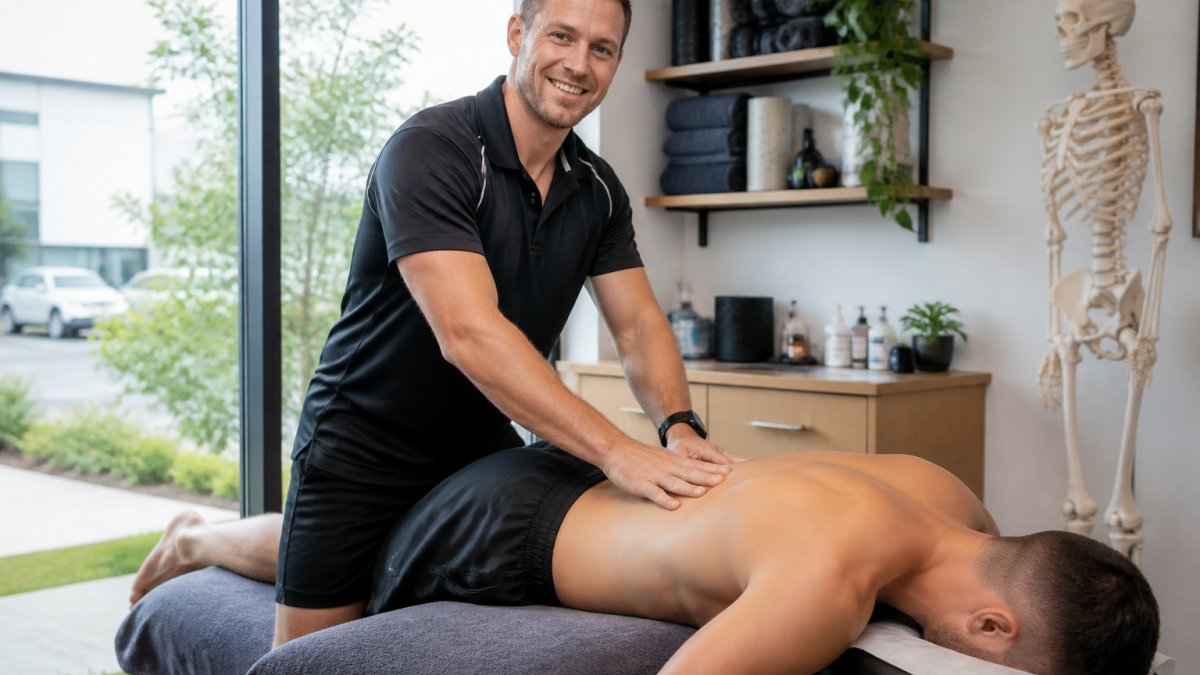
Manual stretch therapy is a hands-on treatment where a trained practitioner moves your joint through its range while you stay relaxed.
Self-stretching has real value: it is free, daily and habit-building, but it has a ceiling.
Assisted stretching removes that limit. Your practitioner applies steady, controlled tension while your muscles stay relaxed. Over time, this can improve stretch tolerance, meaning your body accepts a longer position without fighting it.
The difference between self-stretching and assisted stretching
Think of it as a spectrum rather than a strict either-or.
Self-stretching: you control the force, angle and hold time
Assisted stretching: a practitioner controls the force while you relax
Manual therapy techniques: hands-on work on soft tissue before or during a stretch
Most people get the best results combining all three: a practitioner handles the stubborn restrictions, and you maintain the gains at home.
How a Practitioner Uses Manual Stretching to Improve Flexibility
A session usually starts with an assessment, not a stretch. Your practitioner watches how you move, where you feel tight and which positions reproduce your pain or stiffness, identifying which muscle groups and joints need work rather than stretching a symptom while missing the real driver.
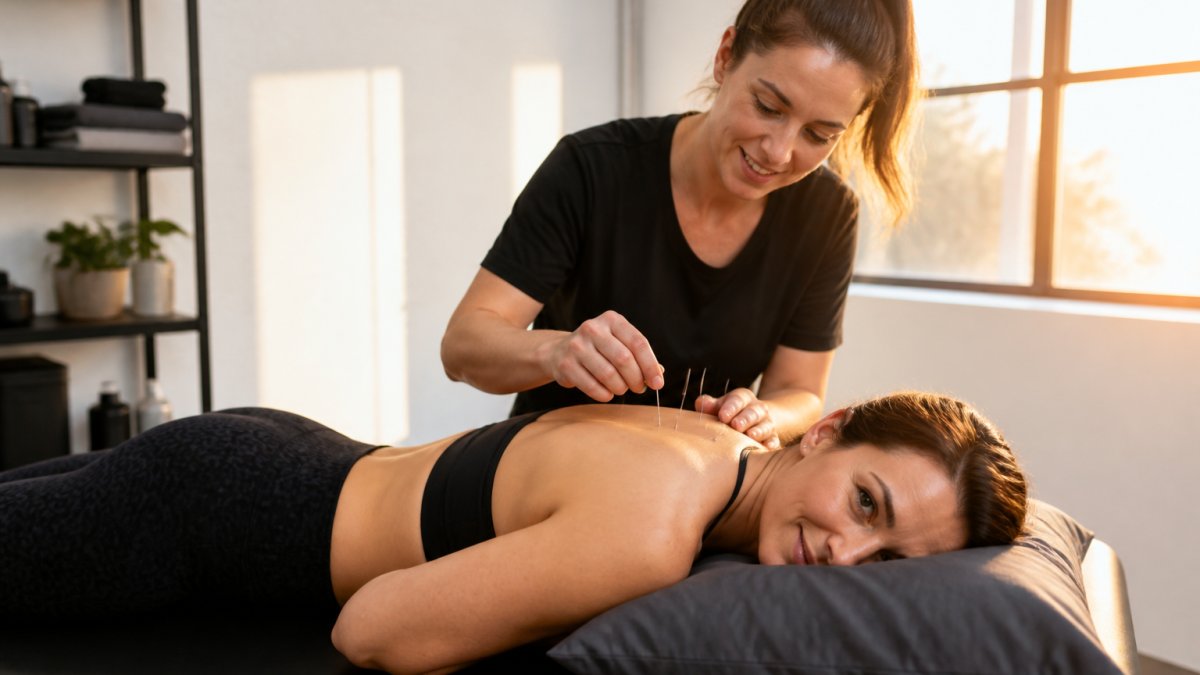
They may then use hands-on release first, remedial massage, myofascial cupping or dry needling to settle tight tissue before stretching it, which often makes the stretch more comfortable and effective.
What happens in a session
Expect a mix of techniques rather than one long stretch. A typical session might include:
Soft tissue release on the tight area
Passive stretching where you fully relax
Active stretching where you gently contract against resistance
Our MARS approach (Mobility, Activation, Release and Stretch) follows this logic: release what is restricted, stretch what is short, then activate the muscles that need to hold the new range.
Positioning and technique for common areas
How a stretch is set up matters as much as how long it is held. Examples:
Hamstrings: you lie on your back while the practitioner lifts one leg, keeping the knee mostly straight and the pelvis neutral, holding at a mild pull.
Hip flexors: you lie on your back near the edge of the table with one leg hanging off, or half-kneel. The practitioner tucks your pelvis into a slight posterior tilt before easing the hip into extension, so the stretch lands on the hip flexor rather than the lower back.
Chest and front of shoulder: you lie on your back with the arm out to the side at roughly shoulder height. The practitioner supports the arm and applies gentle pressure, watching for the shoulder to roll forward or the ribs to flare.
In every case, the practitioner looks for a mild, spreading pull. If you grimace, hold your breath, or the muscle starts to guard, the stretch has gone too far.
Dosage: how long and how often
A common mistake is stretching too hard for too short a time. A gentler stretch held longer usually beats an aggressive one held briefly.
As a general guide:
Hold each stretch for 20 to 30 seconds
Repeat 2 to 4 times per muscle group
Aim for a mild pull, never sharp pain
For hands-on treatment, frequency depends on your history, goals and how your tissue responds. Many people find a short block of regular sessions helps, then taper to maintenance, assessed case by case rather than promising a fixed number.
How a practitioner progresses the work
Progression is not about pushing harder. It is about changing one variable at a time:
Longer holds before heavier pressure
More range only once the current range feels comfortable
Adding activation so the new range is usable, not just passive
If a stretch that felt fine last week now feels sharp, back off and reassess rather than pushing through.
Partner-assisted stretching at home
A partner can replicate some of what a practitioner does, but only with clear communication. Before you start:
Agree on a stop signal, such as tapping the floor twice
The person being stretched stays in charge of how far the stretch goes
The partner moves slowly and holds, rather than bouncing or forcing
A partner should never push a joint past what the person can comfortably tolerate. If you are unsure whether a position is safe, ask a practitioner.

Stretching Exercises to Improve Flexibility at Home
Home work is what makes clinical gains last. If you only stretch on the table, your range drifts back, so a short daily routine protects your progress.
A safe, step-by-step home routine
Do these in order: the first two are release and lengthening, the last two mobility and activation, so the new range gets used rather than lost.
Hamstring floor stretch
Lie on your back, loop a towel or strap around one foot.
Keep the other leg bent with the foot flat on the floor.
Straighten the raised leg until you feel a mild pull behind the thigh.
Hold 30 seconds, breathe slowly, then switch sides. Repeat twice per side.
Kneeling hip flexor stretch
Half-kneel on a cushion, back knee down, front foot flat.
Tuck your pelvis under (think of tilting your belt buckle up towards your ribs).
Ease forward until you feel the front of the back hip lengthen.
Hold 30 seconds each side, twice.
Cat-cow spinal mobility
On all fours, move slowly between arching and rounding your back.
Match the movement to your breath, one direction per breath. 8 to 10 slow reps.
Shoulder wall slides Book a Treatment →
Stand with your back and head against a wall.
Slide your arms up and down, keeping contact with the wall. 10 slow reps.
Finish with a deep squat hold if comfortable: sit at the bottom of a squat with heels down, hold 30 seconds. If your heels lift or knees cave, hold a doorframe for support.
How hard, how long, how often
Intensity: aim for a mild, spreading pull. If you are bracing, holding your breath or grimacing, ease off.
Hold time: 20 to 30 seconds per stretch. Longer holds at lower intensity usually beat short, aggressive ones.
Repetitions: 2 to 4 per muscle group.
How to progress without pushing too far
Progress one variable at a time:
Week 1 to 2: focus on consistency and comfortable holds.
Week 3 to 4: add a few seconds to each hold, or a second round.
Beyond that: add gentle activation after the stretch, such as a slow hamstring curl or glute bridge, so the muscle learns to work in the new range.
If a stretch that felt fine last week now feels sharp, back off and reassess rather than pushing harder.
When to stop and seek advice
Stop the routine and get assessed if you notice:
Sharp pain, numbness or tingling during or after a stretch
A joint that locks, gives way or swells
Pain that wakes you at night or does not ease with rest
Some tightness is not a stretching problem. It is a signal that the restriction is elsewhere, and a hands-on assessment can find the real driver.
Pro Tip Do your home stretches right after a warm shower or light walk. Warm tissue lengthens more comfortably than cold tissue, so the same stretch feels easier and you are less likely to guard against it.
Watch Out Never bounce at the end of a stretch or push into sharp pain. If a stretch causes pain, numbness or tingling, stop and get it checked rather than pushing through.
For general guidance on safe physical activity and injury prevention, the Department of Health and Aged Care outlines national activity recommendations. If you want to understand how flexibility fits into overall physical health, the World Health Organization physical activity guidance is a solid reference. And for background on how stretching affects muscle and joint function, Better Health Channel covers the basics in plain language.
The Best Stretches for Flexibility by Muscle Group
Different areas need different approaches. The best stretches for flexibility target the muscle groups that limit your movement most, not just the ones that feel tight.
Muscle group | Stretch | Hold time | Frequency |
Hamstrings | Lying towel stretch | 30 seconds | Daily |
Hip flexors | Kneeling lunge | 30 seconds | Daily |
Chest | Doorway stretch | 30 seconds | Daily |
Calves | Wall calf stretch | 30 seconds | Daily |
Neck and upper traps | Seated side stretch | 20 seconds | Daily |
Thoracic spine | Cat-cow | 10 reps | Daily |
If one area always feels tight no matter how much you stretch it, that is a signal. Hamstring tightness, for example, sometimes comes from a stiff lower back or an overactive hip. Stretching the symptom alone rarely fixes it.
Mobility Exercises for Stiff Muscles That Support Flexibility Gains
Flexibility is passive range. Mobility is range you can actually control. You need both, and mobility exercises for stiff muscles are the bridge between them.
After you lengthen a muscle, teach it to work in the new range:
Hip circles: stand tall and draw slow circles with one knee, 8 each direction
Shoulder wall slides: keep your back on a wall and slide your arms up and down, 10 reps
Ankle rocks: drive the knee over the toes while the heel stays down, 10 each side
This is where many home routines fall short: people stretch, feel looser, then lose it within a day because the muscles never learned to hold the range.
How Often to Stretch for Flexibility (And How to Track Progress)
Consistency beats intensity. Most people see better results from a short daily routine than one long weekly session. Stretching a few times a week maintains range; daily work builds it faster.
Tracking keeps you honest, because flexibility changes slowly and progress is easy to miss. A simple way to measure it:
Pick two or three test movements, like a sit-and-reach or a kneeling lunge
Note how far you get and how it feels, once a week
Keep the same warm-up each time so the comparison is fair
If the numbers are not moving after several weeks of consistent work, the restriction is probably not where you think it is, and a hands-on assessment can find the real driver.
When to Seek Clinical Advice: Warning Signs and Contraindications
Some tightness is not a stretching problem. It is a signal to get assessed, and knowing when to stop and ask for help matters more than any single stretch.
See a qualified professional if you notice:
Pain that wakes you at night or does not ease with rest
Numbness, tingling or weakness in a limb
A joint that locks, gives way or swells
Aggressive stretching is also not always appropriate. Recent fractures, acute muscle tears, uncontrolled inflammatory conditions and some joint replacements need clearance first. Pregnancy is another area where positioning and technique matter, and a practitioner trained in pregnancy-safe work can adapt the approach.
Key Takeaway Stretching should feel like a gentle pull, never a sharp pain. If a stretch hurts, your body is telling you something, and the answer is usually assessment, not more force.
If you have tried physiotherapy or other treatments without the result you wanted, a hands-on musculoskeletal assessment can look at the problem from a different angle. That is the space we work in at Fix My Muscles, where manual stretch therapy fits alongside remedial massage, dry needling and cupping. Private health fund rebates are available through HICAPS, so it is worth checking what your cover includes.
For general guidance on safe physical activity and injury prevention, the Department of Health and Aged Care outlines national activity recommendations. If you want to understand how flexibility fits into overall physical health, the World Health Organization physical activity guidance is a solid reference. And for background on how stretching affects muscle and joint function, Better Health Channel covers the basics in plain language.
Frequently Asked Questions
How does manual stretch therapy work?
A practitioner moves your limb or joint through a controlled range while you stay relaxed, holding the position long enough to let the tissue adapt. This differs from self-stretching because an external hand can take the muscle closer to its end range and hold it there steadily, which may improve stretch tolerance. Most people notice easier movement and less stiffness within a few sessions, though lasting flexibility changes take consistent work between appointments.
Is manual stretch therapy suitable for people with stiffness or restricted movement?
It can suit many people with stiffness or restricted movement, including those who find self-stretching difficult to do well alone. A practitioner can adjust pressure, angle and duration to your comfort. However, it is not appropriate for everyone: recent fractures, acute injuries, uncontrolled inflammation, or certain medical conditions need clearance first. Always tell your practitioner about your health history, and seek advice from a qualified health professional if you are unsure.
How often should you stretch to improve flexibility?
Most people see gradual improvement with stretching most days, even short sessions of five to ten minutes. For a specific muscle group, two to four focused sessions per week is a practical starting point. If you are also having manual stretch therapy, your practitioner can suggest how often to stretch between appointments. Consistency matters more than duration: regular, gentle stretching beats occasional long sessions.
Can a 70-year-old regain flexibility?
Yes, flexibility can improve at any age with regular, appropriate stretching and mobility work. Older adults often benefit from slower progressions, longer warm-ups and more recovery time between sessions. A practitioner can tailor a manual stretch therapy plan to your joint health and any existing conditions. Progress may be slower than for a younger person, but improved range of motion and ease of movement are realistic goals with consistent effort.
Stiffness that keeps coming back is frustrating, especially when you have already tried other approaches. At Fix My Muscles, our team combines remedial and sports massage, dry needling, myofascial cupping and manual stretch therapy through our MARS approach to target the real driver of your restriction, not just the symptom. With HICAPS private health rebates available, getting assessed is straightforward. Book now with Fix My Muscles and start moving better.
Book a Treatment

Comments