


Manual Stretch Therapy Benefits for Athletes
Table of Contents
Why Manual Stretch Therapy Fits Athletic Training
How Manual Stretch Therapy Works for Athletes
Assisted Stretching for Athletes: What Changes in Flexibility and Range of Motion
Therapeutic Exercise vs Manual Therapy: How They Work Together
Stretching for Sports Injury Recovery: What It Can and Cannot Do
Athlete Mobility Exercises to Continue Between Sessions
Measuring Progress and Knowing When to Stop
Conclusion: Building Stretch Therapy Into Your Training Week
Frequently Asked Questions
Last Updated: October 13, 2026
Why Manual Stretch Therapy Fits Athletic Training
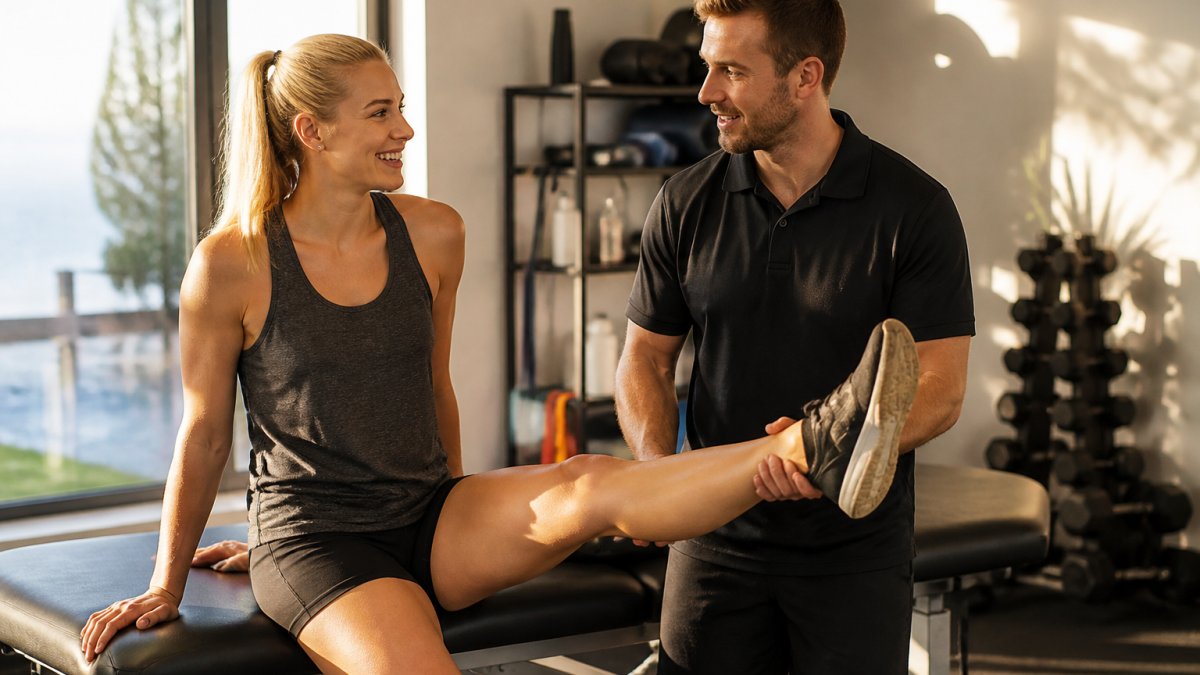
Manual stretch therapy is a hands-on treatment where a trained practitioner guides your joints and muscles through controlled stretches you cannot achieve alone. For athletes, the appeal is simple: you get deeper range, targeted release of tight tissue, and a clearer picture of where your movement is restricted.
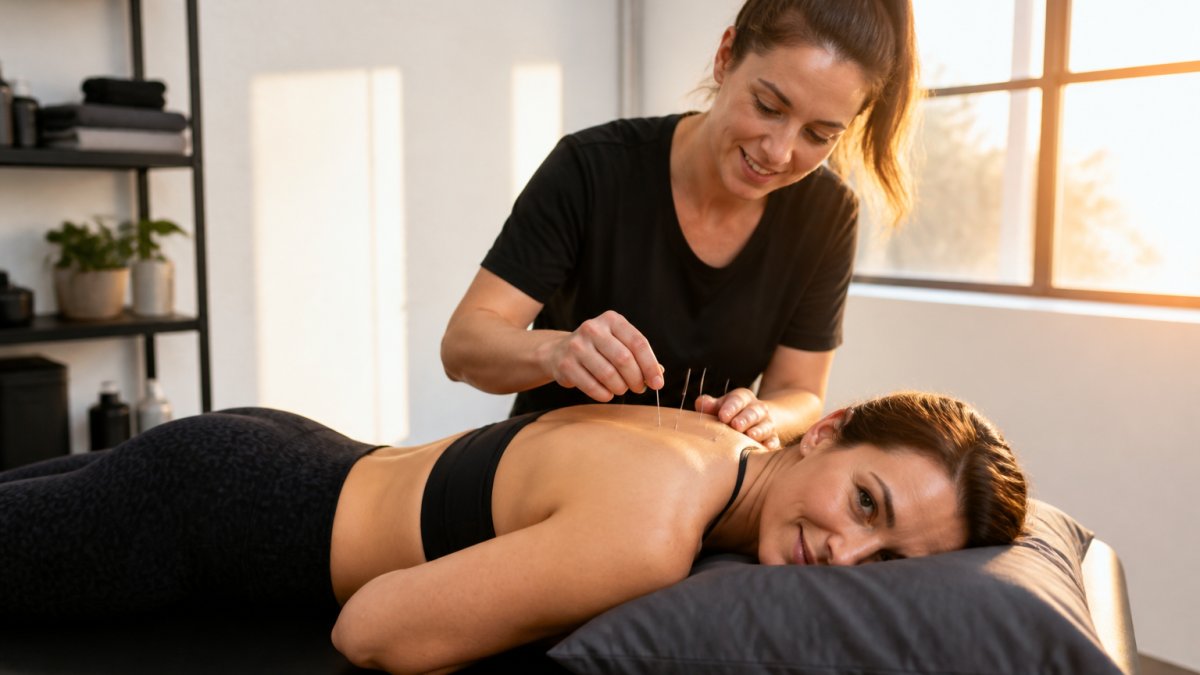
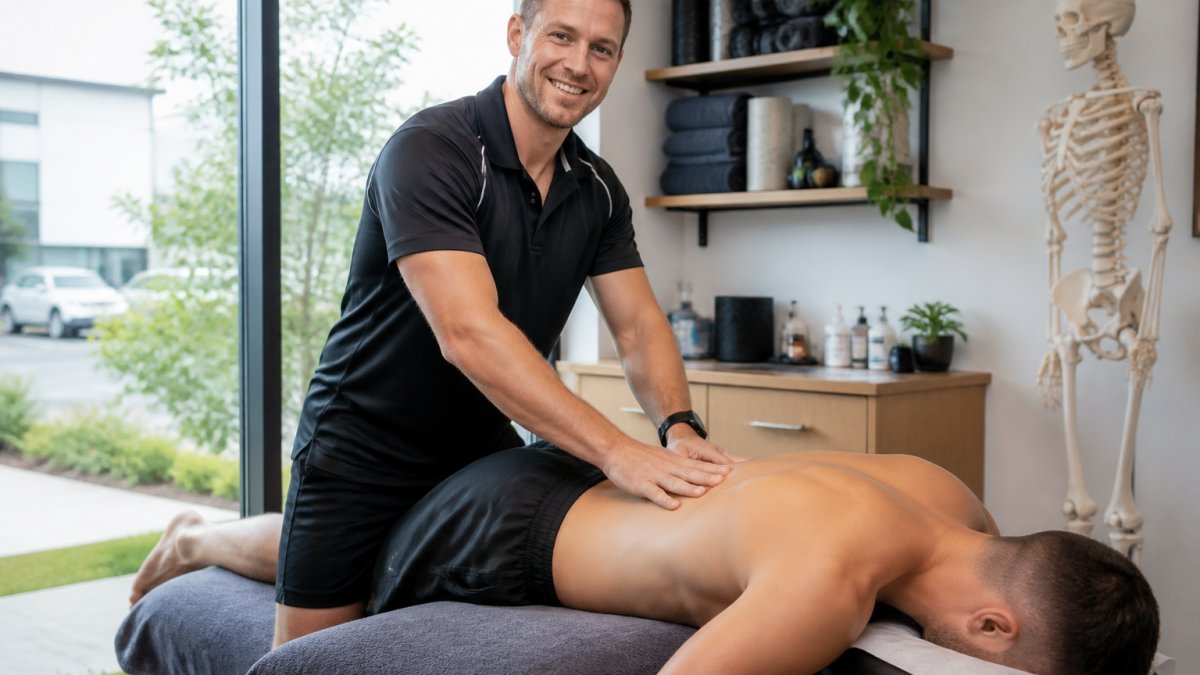
At Fix My Muscles, we treat sports injuries, chronic stiffness and restricted mobility every week. Our therapists use manual stretch therapy alongside remedial and sports massage, dry needling and myofascial cupping to help athletes move better.
Here is the part most training programs miss. Stretching on your own has limits. You can only push so far before your body protects itself. A practitioner can take you past that point safely.
That extra range matters. It changes how you squat, sprint, throw and land. Below, we break down how manual stretch therapy works, what it can and cannot do for recovery, and how to build it into your training week.
How Manual Stretch Therapy Works for Athletes
Most articles describe what manual stretch therapy does. Fewer explain what actually happens on the table. Here is the practical version.
Before the session
A proper session starts with screening, not stretching. Your therapist will ask about your sport, your training phase, recent injuries, any joint that feels unstable, and whether you have a history of hypermobility. They will also check active and passive range at the joints most relevant to your sport, hips and ankles for runners, thoracic spine and shoulders for overhead athletes, hamstrings and hip flexors for field sport players.
This matters because stretching is not appropriate for everyone on every day. Acute injuries, recent surgery, joint hypermobility and nerve-related symptoms all change the plan. A therapist who skips screening is guessing.
During the session
A typical hands-on stretch sequence looks like this:
Warm-up, light movement or soft tissue work to raise tissue temperature. Stretching cold tissue is less effective and less comfortable.
Mobility work, the therapist moves the joint through its available range, often with gentle oscillation, to see where it stops and why.
Activation, low-level contractions in the target area to wake up muscles that are not doing their share of the work.
Release, hands-on techniques such as trigger point work, myofascial release or dry needling where the tissue is guarded.
Stretch, the therapist takes the limb through a controlled stretch, holds it, and works with your breathing rather than against it. You stay relaxed; they do the work.
Re-test, the same range check from the start, so you can see whether anything actually changed.
That sequence is the MARS approach in practice, Mobility, Activation, Release, Stretch, and it is why the session is structured rather than a random series of stretches.
How long and how often
A single session usually runs 30 to 60 minutes depending on how many areas are being treated. Most athletes find one session every one to three weeks works well during a heavy training block, tapering to maintenance sessions in the off-season. More is not automatically better, tissue needs time to adapt between sessions.
After the session
You will usually feel looser straight away. That feeling can last anywhere from a few hours to a couple of days. What you do in the 24 hours after matters: light movement, hydration and the home mobility work your therapist gives you all help the range stick. Heavy loading of a freshly stretched area the same day is not ideal.

Pro Tip Ask your therapist to re-test the same movement at the end of every session. If the number does not move, the technique or the target area may need to change.
Assisted Stretching for Athletes: What Changes in Flexibility and Range of Motion
Assisted stretching for athletes targets the gap between what you can do alone and what your body is actually capable of. A practitioner adds controlled force and the right angle, which lets tissue lengthen further than self-stretching allows.
What changes over time:
Range of motion improves at specific joints, not just generally
Flexibility becomes more usable because the tissue is both longer and stronger
Movement quality improves as restrictions clear
Muscle balance evens out between opposing muscle groups
The gains are real but modest per session. Progress builds across weeks, not one appointment. Many athletes find the biggest change is how movement feels, not a dramatic jump in a single measurement.
Pro Tip Track one or two specific movements, like how far you can reach in a lunge or how deep you can squat. Vague feelings of "looser" are hard to measure. A single test you repeat each week tells you far more.
Therapeutic Exercise vs Manual Therapy: How They Work Together
Manual therapy and therapeutic exercise are not competing options. They do different jobs, and the right mix depends on your sport, your training phase and what is actually limiting you.
Approach | What It Does | Best Used For | Limits |
Manual therapy (including hands-on stretching) | Releases restricted tissue, restores joint range | Breaking a plateau, pre-season range work, post-injury stiffness | Gains fade without follow-up loading |
Therapeutic exercise | Builds strength and control in the new range | Locking in gains between sessions | Cannot create range that is not there |
Self-stretching | Maintains range at home | Daily upkeep, cool-downs | Limited by your own stretch tolerance |
Dynamic warm-up | Prepares the body for movement | Immediately before training or competition | Does not build lasting range |
How to choose, by situation
Pre-season, building range: manual therapy plus a progressive mobility program. This is when you have the time to make bigger changes.
In-season, maintaining range: short self-stretching and mobility work most days, with manual therapy as a top-up when something tightens up.
Pre-event: dynamic warm-up only. Long static stretching before competition can temporarily reduce power output, so save the deep work for another day.
Post-training recovery: light self-stretching, mobility flow, or a scheduled manual therapy session if you are carrying tightness that is affecting your movement.
Post-injury, returning to sport: manual therapy to restore range, then therapeutic exercise to rebuild strength and control through that range. Skipping the second step is the most common reason range disappears again.
The order matters
Manual therapy opens the door. Exercise makes sure it stays open. If you only get stretched, the range fades within days. If you only exercise without addressing a restriction, you may be training around a limit that never resolves.
A common pattern in clinic is an athlete who has been stretching the same hamstring for months with no change. The restriction is often not in the hamstring at all, it is in the hip, the ankle or the neural tissue. That is where hands-on assessment and treatment change the picture, and where a structured approach like MARS helps direct the session.
Key Takeaway Use manual therapy to create range, exercise to keep it, and a dynamic warm-up to use it on game day. Each has a job, none replaces the others.
Stretching for Sports Injury Recovery: What It Can and Cannot Do
Stretching for sports injury recovery helps restore movement and reduce muscle tension around an injured area. It does not heal torn tissue, fix a joint problem, or replace proper rehabilitation.
What it can do:
Reduce stiffness around the injury
Restore range you lost while protecting the area
Ease muscle tension that built up from compensating
Support circulation and blood flow to the tissue
What it cannot do:
Repair a torn ligament or muscle
Replace strength work
Guarantee a faster return to sport
Watch Out Stretching an acute injury too early or too hard can make it worse. Sharp pain, swelling or a joint that gives way are signals to stop and get assessed, not to push through.
If you have tried physiotherapy without the results you wanted, a hands-on approach may still help. But it works best as part of a plan, not as a standalone fix.
Athlete Mobility Exercises to Continue Between Sessions
Athlete mobility exercises keep the range you gained in the clinic. Do them little and often, not hard and rarely.
A simple routine:
Hip flexor stretch - half kneeling, 30 seconds each side
Thoracic rotation - seated or on all fours, 8 slow reps each side
Hamstring floss - controlled leg swings, 10 each side
Ankle rocks - knee to wall, 10 each side
Shoulder circles - slow and full range, 10 each direction
Do this before training as a warm-up or after as a cool-down. Keep the movements slow. Speed defeats the purpose.
Pair mobility work with activation. Glute bridges, banded walks and calf raises teach your body to use the range you have built. That is where a lot of athletes lose their gains.
Measuring Progress and Knowing When to Stop
Progress in manual stretch therapy is measurable, but you have to pick the right markers.
Track these:
Range of motion on a specific movement, tested the same way each time
Pain level during and after training
How movement feels in your sport, not just in the clinic
Recovery time after hard sessions
Stop and reassess if you notice:
Sharp or shooting pain during a stretch
Numbness or tingling
A joint that feels unstable
Pain that lingers longer than a day or two after a session
Mild soreness after treatment is normal. Sharp pain is not. Tell your therapist if something feels wrong, and never push into pain to chase a result.
Key Takeaway The best measure of progress is not how far you can stretch on the table. It is how well you move and perform in your sport.
Conclusion: Building Stretch Therapy Into Your Training Week
Fitting manual stretch therapy into a busy training week takes planning, and knowing when to book, how often to go and how to keep the work going at home is where most athletes fall short.
At Fix My Muscles, we build a plan around your sport and your schedule. Our therapists combine manual stretch therapy with sports massage, dry needling and myofascial cupping, and we accept HICAPS and private health fund rebates.
Book a session with Fix My Muscles and get a hands-on plan to move better and stay in your sport.
Frequently Asked Questions
How is manual stretch therapy different from therapeutic exercise?
Manual stretch therapy is hands-on: a practitioner moves your joint through its range while you stay relaxed, so they can control the direction, speed and end point. Therapeutic exercise is what you do yourself, such as loaded mobility drills or strength work. The two address different things. Manual work can release tension and restore range that you cannot reach alone, while exercise builds the strength and control to keep that range. Most athletes get better results combining both rather than choosing one.
Does stretch therapy really work for athletes?
Research on assisted stretching shows modest but real short-term gains in range of motion, often similar to a sustained self-stretch but achieved with less effort from the athlete. Where it stands out is in how you feel afterwards: less stiffness, easier movement and better tolerance of training loads. It is not a magic fix for strength or speed. Treat it as one part of a recovery and mobility program, alongside sleep, nutrition, load management and your own mobility work.
When should athletes avoid stretching an injury?
Skip aggressive stretching after a suspected tear, fracture, joint dislocation or when you have sharp pain, swelling, numbness or a joint that gives way. In those situations, stretching can make the injury worse. Get the injury assessed first, then follow the plan you are given. Once you are cleared, gentle movement and controlled stretching may help restore range. If any stretch produces sharp pain or a feeling of instability, stop and have it reviewed.
How often should athletes have manual stretch therapy?
There is no single schedule that suits everyone. In-season athletes often book a session every one to two weeks to manage tightness and support recovery, while those in a heavy training block or returning from injury may need closer spacing for a short period. Off-season is a good time for less frequent, more thorough sessions. Your practitioner should adjust the frequency based on your sport, training load, injury history and how you respond between visits.
Book a Treatment
Comments