


How Do You Fit Mobility Work Into a Daily Routine?
Last Updated: November 5, 2026
Quick Summary
Fit mobility work into your day by anchoring short sessions to cues you already hit, such as brushing your teeth or sitting at your desk. Do a 10-minute full-body routine, add desk movement snacks every hour, and use 5 minutes of dynamic mobility before workouts.
Mobility is active range you control, while flexibility is passive range with outside help.
The 10-minute routine covers ankles, hips, spine, shoulders, neck and a full-body flow.
At your desk, do one movement for 60 seconds every 60 to 90 minutes of sitting.
Before training, use 5 minutes of dynamic stretching rather than long static holds.
Progress by adding a session, a joint or range, one at a time, holding each for two weeks.
Table of Contents
Why Mobility Work Belongs in Your Everyday Movement
Mobility work is the practice of actively moving your joints through their full range while staying in control. At Fix My Muscles, we see the results of skipped mobility every day: stiff hips, locked shoulders, and backs that complain after an hour in a chair. (Source: the benefits of regular physical activity)
Here is the core problem. Most people treat movement as something that happens during a workout. The rest of the day, they sit. Joints that stay still for long stretches get stiff, and stiff joints change how you move.
The good news is that mobility work is quick to fit in. A few focused minutes a day can do more than one long session a week.
Mobility vs Flexibility: What Actually Differs
Flexibility is how far a joint can move with outside help, like a relaxed hamstring stretch.
Think of it this way. Flexibility is the range available to you. Mobility is the range you can actually use.
That is why a person can be very flexible and still move badly. If you cannot control the end of your range, your body will protect itself by tightening up.
Flexibility: passive range, often measured lying down
Mobility: active range, controlled by your own muscles
Joint function: how well the joint moves under real load
Mobility Exercises for Beginners: Start With These Five
Beginners should start with five simple movements that cover the main joints. Do each one slowly, and stop before anything sharp or pinching.
Hip circles: stand tall, hands on hips, draw slow circles in each direction. Ten each way.
Shoulder rolls and wall slides: roll the shoulders back, then slide your forearms up a wall. Eight slow reps.
Cat-cow: on hands and knees, alternate arching and rounding the spine. Ten slow reps.
Ankle rocks: half-kneel facing a wall, drive the front knee forward over the toes. Ten per side.
Standing spinal rotation: feet planted, rotate the torso side to side with control. Eight per side.
Keep every rep controlled. Speed hides stiffness; slowness exposes it.

Your 10-Minute Mobility Routine, Step by Step
A 10-minute mobility routine is enough to cover the whole body when you keep it structured.
Here is the routine we suggest for most people:
Ankles, 1 minute: ankle rocks, ten per side.
Hips, 2 minutes: deep lunge hold, 30 seconds per side, then hip circles.
Spine, 2 minutes: cat-cow, then slow seated rotations.
Shoulders, 2 minutes: wall slides and shoulder circles.
Neck, 1 minute: slow turns and gentle tilts, no forcing.
Full-body flow, 2 minutes: a slow squat-to-stand with a reach overhead.
Breathe steadily through each movement. If you find yourself holding your breath, slow down.
A spiky trigger ball is a handy extra for tight spots between sessions. You can browse the trigger balls we stock for self-massage at home.
Here is how the 10 minutes break down across the body.
Body area | Time | What to do |
Ankles | 1 minute | Ankle rocks, ten per side |
Hips | 2 minutes | Deep lunge hold 30 seconds per side, then hip circles |
Spine | 2 minutes | Cat-cow, then slow seated rotations |
Shoulders | 2 minutes | Wall slides and shoulder circles |
Neck | 1 minute | Slow turns and gentle tilts, no forcing |
Full body | 2 minutes | Slow squat-to-stand with a reach overhead |
Desk Mobility Exercises for Long Sitting Days
Desk mobility exercises are short movements you can do without leaving your chair. They break up prolonged sitting and ease stiffness in the neck, shoulders, and hips.
Try these every hour or so:
Neck turns: slowly look left, then right, five each side.
Shoulder blade squeezes: pull the shoulder blades back and down, hold five seconds, repeat eight times.
Seated spinal twist: rotate the torso gently to each side, hold ten seconds.
Set a timer. If desk days are leaving you with a stubborn neck, our guide on how to fix chronic desk neck pain goes deeper.
Mobility Exercises Before Workout: Warm-Up That Counts
A good warm-up is mobility work with a purpose. It raises joint temperature, rehearses the movement you are about to train, and lowers injury risk.
Use dynamic stretching, not static holds. Save the long holds for after training, when your muscles are warm and pliable. (Source: guidelines on safe exercise practices)
Leg swings: forward and back, then across the body, ten each.
Deep lunge with rotation: step into a lunge and rotate toward the front leg.
Arm circles and band pull-aparts: wake up the shoulders.
Five minutes of this before strength training prepares the joints you are about to load. It also sharpens your movement patterns, so every rep counts.
Building the Habit: Plans for Different Schedules
Consistency beats duration every time. The trick is matching the plan to your actual week, not an ideal one. Many people find mobility work hard to sustain when the plan assumes a free hour that never arrives. The fix is to anchor short sessions to cues you already hit every day, then progress only when the current plan feels automatic.
Here are four concrete plans. Pick the one that matches your week, run it for two weeks, then adjust.
The busy week: three 5-minute sessions
Anchor each session to a daily cue you never skip. Common anchors are brushing your teeth, boiling the kettle, or the moment you sit down at your desk. Do the same five-movement sequence each time so you are not deciding what to do. After two weeks, add one extra session rather than making each session longer. Frequency tends to matter more than duration for building a habit.
The desk week: movement snacks plus two longer sessions
Set a timer for every 60 to 90 minutes of sitting. When it goes off, do one desk movement from the list above for 60 seconds, then return to work. On two evenings, do the full 10-minute routine. The desk snacks handle stiffness accumulation; the longer sessions build range. If you work from home, pair the evening routine with a fixed event such as the end of the workday or the evening news.
The training week: pre-session plus one rest-day session
Do 5 minutes of dynamic mobility before every training session, using the warm-up movements in the section above. On one rest day, do a 15-minute session that covers ankles, hips, spine, and shoulders. This plan works because the pre-session work is already attached to a habit you have, and the rest-day session fills the gap without adding a new daily obligation.
The beginner week: alternate days until it feels easy
Run the 10-minute routine on alternate days, ideally at the same time each day. Do not add exercises until the current routine feels smooth and you are not sore the next day. Beginners often add too much too soon, then stop when stiffness or mild soreness makes the habit feel like a chore.
How to progress without overdoing it
Progress in one of three ways: add a session, add a joint, or add range. Add only one at a time, and hold the new level for at least two weeks before changing anything else. If a movement starts to feel sharp or pinching, scale it back rather than pushing through.
Watch out: attaching mobility work to a cue that changes daily, such as "after my workout," often fails because the cue itself is inconsistent. Choose a cue that happens whether or not you train.
If you want more on the everyday benefits of stretching, our article on the benefits of stretching with massages covers the wider picture. For a broader look at how Australian health authorities frame physical activity and movement breaks, the Department of Health and Aged Care publishes physical activity and sedentary behaviour guidance.
Tracking Progress and Knowing When to Seek Hands-On Help
Track progress with simple checks rather than complicated apps. Note how far you can reach, how a movement feels, and whether stiffness fades faster than it used to. The goal is not to chase a number but to notice whether daily movement is getting easier and whether stiffness from sitting clears more quickly.
A basic log works. Record four things once a week:
Range: can you get deeper into a squat or lunge this month than last month?
Ease: does the same movement feel smoother or require less effort?
Stiffness: does it clear faster after sitting or first thing in the morning?
Keep the log short. A note on your phone or a line in a diary is enough. The value comes from comparing weeks, not from measuring every session.
Distinguishing normal stretch sensation from pain
A normal stretch sensation is a mild, diffuse pull at the edge of your range that eases when you back off. It should not be sharp, pinching, electric, or felt in a joint rather than a muscle.
Watch out: pushing into sharp pain to "gain range" often sets you back. Discomfort at the edge of your range is normal; pain that lingers is a signal to ease off and get it checked.
Scaling movements when something flares
If a movement flares a joint, reduce the range, reduce the reps, or switch to a supported version such as a chair-assisted hip hinge or a wall slide instead of a floor-based movement. Return to the full version only when the scaled version feels comfortable for several sessions. A short step back for a week can help avoid a longer setback.
When to seek hands-on help
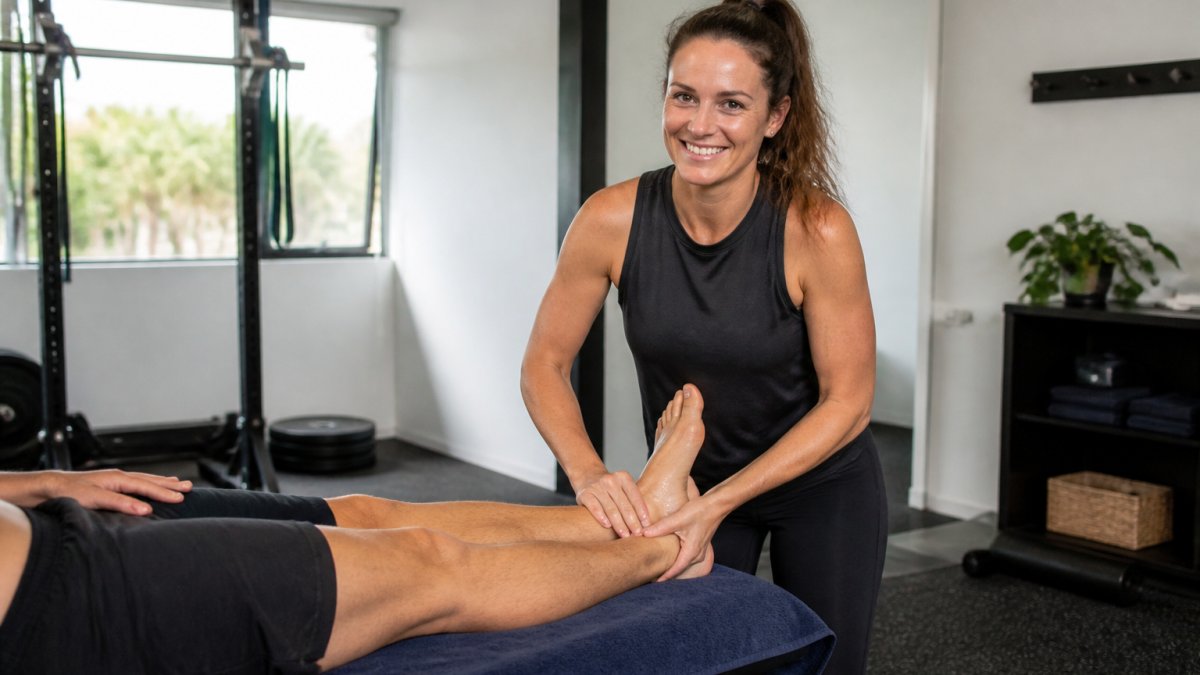
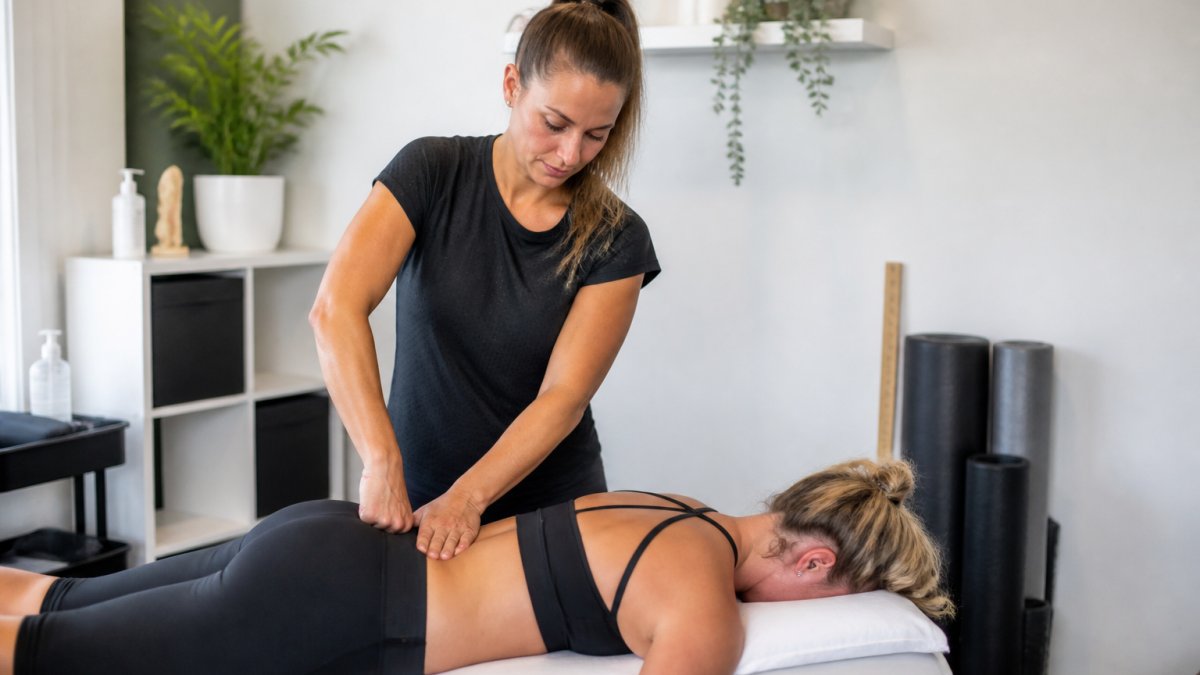
If a joint stays stiff despite weeks of consistent work, if pain limits your movement, or if you find yourself avoiding certain movements because of discomfort, it is worth getting hands-on help. Our manual stretch therapy combines assisted stretching with hands-on release, and may help where self-directed work has not shifted range.
For general guidance on what to do when pain persists, the Australian Commission on Safety and Quality in Health Care and healthdirect Australia provide plain-language information on pain and when to seek advice.
Booking a Movement Assessment With Fix My Muscles
A movement assessment looks at how your joints and muscles actually move, then maps a plan to the restrictions we find.
Our team uses remedial massage, myofascial cupping, dry needling and manual stretch therapy where they fit your needs. We also accept HICAPS and private health fund rebates, and can help with claiming.
If self-directed mobility work has stalled, a hands-on assessment can find what is holding you back. Book online to arrange your movement assessment with Fix My Muscles and start moving with more freedom.
Frequently Asked Questions
How do I incorporate mobility work into my daily routine when I have no spare time?
Attach mobility work to something you already do rather than finding a new slot in the day. Two or three minutes of hip and shoulder movement while the kettle boils, a short spine sequence before you sit down at your desk, or ankle and hip drills during the ad break of an evening show all count. A 10-minute mobility routine is useful, but consistency matters more than duration. Short, frequent sessions spread across the week are often easier to maintain than one long session.
Is it OK to do mobility exercises every day?
Daily mobility work at a comfortable effort is often well tolerated, especially gentle, controlled movements. Check with a qualified health professional if you have an existing condition. The main caution is intensity: avoid pushing into sharp pain or forcing a joint past its comfortable range. Rotate your focus across body areas, such as hips and ankles one day and shoulders and spine the next, so no single joint is loaded hard every day. If a movement consistently produces pain, stop and have it assessed rather than working through it.
Can mobility exercises help with stiffness from sitting at a desk?
Desk mobility exercises target the areas that stiffen most during prolonged sitting: hip flexors, thoracic spine, neck and shoulders. Regular short breaks to move through controlled ranges can reduce the feeling of tightness and help you return to better posture. Pairing the movement with practical changes such as standing for calls or adjusting your screen height may help. If stiffness persists despite consistent movement, speak with a qualified professional about an assessment.
Should I do mobility work before or after a workout?
Both have a place. Dynamic mobility exercises before a workout prepare joints and muscles for the ranges you are about to use, which supports movement quality and training performance. Static stretching fits better afterwards, when muscles are warm and the goal is restoring length rather than preparing for load. Keep the pre-workout portion brief, around five to eight minutes, and prioritise the joints your session actually uses, such as hips and ankles for squats or shoulders for pressing.
Stiff joints rarely fix themselves, and guessing at the cause wastes time. If your mobility work has plateaued, let our team assess what is actually restricting your movement. With hands-on treatment, the MARS approach, and rebates through HICAPS, Fix My Muscles makes it straightforward to get started. Book your assessment and take the first step toward moving better.

Comments