


Myofascial Release Techniques for Recurring Muscle Tightness
Last Updated: November 21, 2026
Quick Summary
Myofascial release is a hands-on technique that applies gentle, sustained pressure to the fascia, the connective tissue wrapping muscles, to ease restrictions. For recurring tightness, self-treatment with a foam roller or massage ball, done slowly for 30 to 60 seconds per spot, works best alongside addressing posture, load and movement.
Move slowly over the muscle, at roughly one inch per second, to find tender spots.
Hold each tender spot for 30 to 60 seconds and breathe slowly.
Keep self-treatment sessions to about 5 to 10 minutes, 3 to 5 times a week.
Recurring tightness often reflects load, movement patterns or recovery, not only the muscle itself.
Track range of motion and a 0 to 10 tightness score over four to six weeks.
Tired of tightness that keeps coming back?
Fix My Muscles offers hands-on treatment tailored to recurring muscle tightness and movement problems.
Table of Contents
What Myofascial Release Is and How Fascia Affects Muscle Tightness
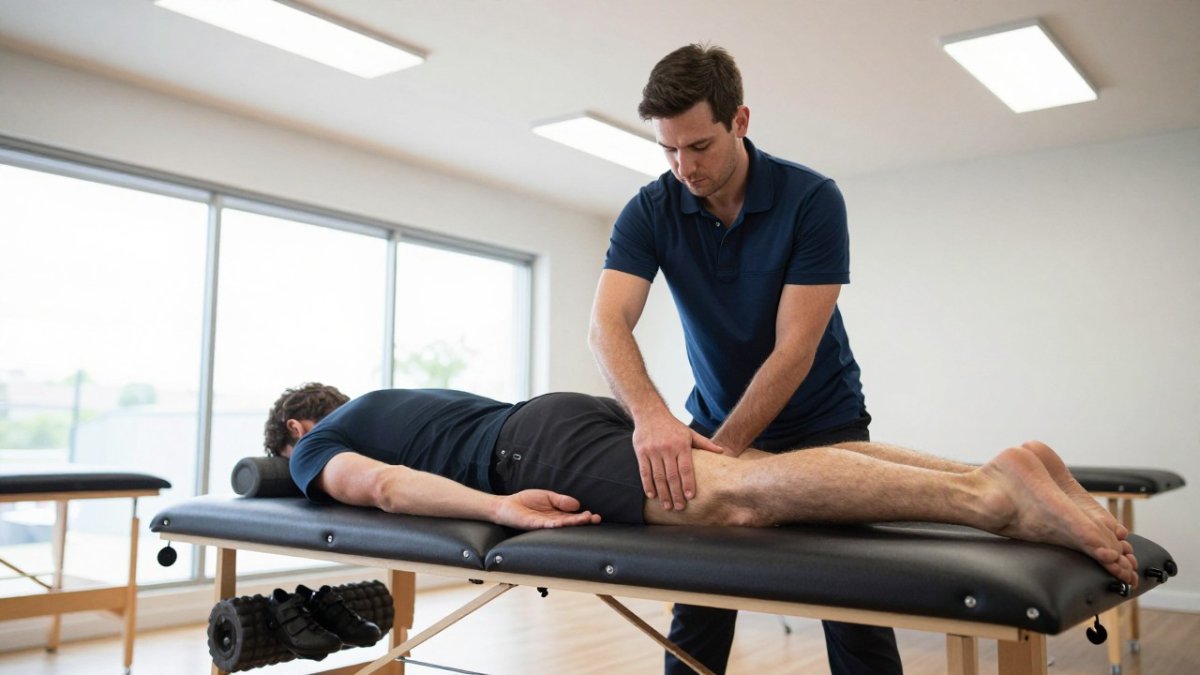
Myofascial release is a hands-on technique that applies gentle, sustained pressure to the fascia, the thin connective tissue that wraps around muscles and joins them together.
Fascia is more than a wrapper. It transmits force between muscles and helps them glide past each other during movement.
Researchers are still working out exactly how fascia changes with injury, inactivity and load, so treat the mechanisms as an area of active study rather than settled fact. Many people report that sustained, slow pressure eases the sensation of tightness.
Myofascial release is usually performed in three ways:
Hands-on treatment: A practitioner uses slow, steady pressure over the area.
Self-treatment: You use a foam roller, massage ball or similar tool.
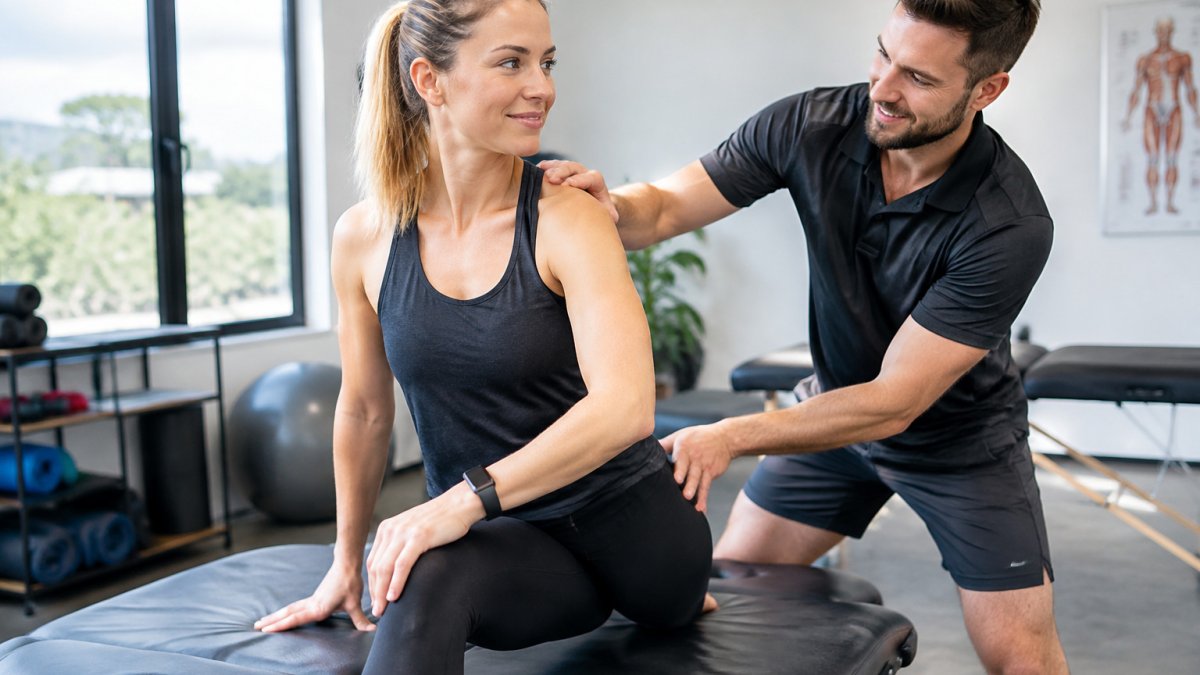
Combined care: Hands-on work is paired with mobility, activation and stretching.
Why Muscle Tightness Keeps Coming Back
Tightness that returns is rarely a mystery of the muscle itself. If you have recurring neck and shoulder problems, see our treatment for chronic neck and shoulder issues.
A useful way to think about recurrence is to separate local tissue factors from systemic and behavioural factors. Local factors include the muscle's current length, strength and tolerance to load.
Common contributors and what they actually do:
Sustained static posture (long sitting, driving, screen work) holds muscles in a shortened position for hours. The tissue adapts to that length, and the opposing muscles become inactive. The tightness is often a symptom of that sustained position, not a primary muscle problem.
Repetitive loading without variation (running the same route, cycling in the same position, lifting with the same technique) concentrates strain on the same fibres. Variety in range and load is what keeps tissue resilient.
Weak or inhibited muscles leave synergists to overwork. A common pattern is the glutes going quiet while the hamstrings and lower back compensate, the hamstrings feel tight, but the driver is elsewhere.
Incomplete recovery from sleep, stress or heavy training blocks reduces the tissue's capacity to adapt. Tightness can be an early warning of accumulated fatigue.
Restricted joint mobility elsewhere in the chain forces muscles to compensate. A stiff ankle changes how the calf, knee and hip share load during walking and running.
A practical way to address recurrence is the MARS approach used at our clinic: Mobility, Activation, Release and Stretch. When tightness keeps returning despite mobility, activation, release and stretching, knowing when to see a practitioner can help you decide whether the pattern needs a closer assessment.
Tightness is often a signal about load and movement, not only a problem inside the muscle.
Australian Government Department of Health and Aged Care physical activity and sedentary behaviour guidelines
Better Health Channel information on muscle cramps and tightness
Self Myofascial Release Techniques: A Step-by-Step Routine
Self-treatment works best when it is gentle, consistent and stopped if anything feels wrong. For a hands-on alternative to self-treatment, see our manual stretch therapy. The routine below is a general starting point, but the parameters change by body area and tool. Use the body-area guidance further down to adapt it.
What you will need: a foam roller, a massage ball (a firm ball or tennis ball works for many people), and a clear floor space.
Warm up for 3 to 5 minutes with light walking or easy movement. Cold tissue does not respond well to pressure.
Find the tight area by moving slowly over the muscle until you locate a tender spot. Move at roughly one inch per second, fast rolling skips the tissue you are trying to reach.
Apply gentle pressure and hold on the spot. Breathe slowly and let the surrounding muscles relax rather than bracing.
Stay until the sensation eases (typically 30 to 60 seconds), then move to the next spot. If it does not ease, reduce the pressure rather than pushing harder.
Finish with a stretch for the same muscle group, holding it for 20 to 30 seconds without bouncing.
Note how you feel before and after, so you can track progress over weeks rather than days.
Choosing Pressure, Duration and Frequency
Start light. A good guide is a 4 out of 10 on discomfort, where you feel pressure but can still breathe easily and relax the surrounding muscles. Sharp pain, numbness, tingling or pain that lingers for hours afterwards are signs to back off.
Pressure: Begin gently and increase slowly over several sessions. Body weight controls pressure on a roller; on a ball, control it with how much you lean in.
Duration: Hold each spot for 30 to 60 seconds, moving slowly. Spend no more than 1 to 2 minutes on any one muscle group per session.
Frequency: Most people do short sessions of about 5 to 10 minutes, 3 to 5 times a week. Daily short sessions are usually better tolerated than long weekly ones.
Watch out: Rolling aggressively over an already sore area can leave it more guarded for a day or two, which defeats the purpose.
Tool-by-Tool Modifications
Different tools suit different areas and experience levels. A common mistake is using a firm roller on a small, bony area where a ball would be safer and more precise.
Smooth foam roller: Best for large muscle groups (calves, hamstrings, quadriceps, upper back). Beginner-friendly because pressure is spread over a wider surface.
Textured or grid roller: Provides more focused pressure. Useful once you are comfortable with a smooth roller, but avoid it on irritated or bruised tissue.
Massage ball (tennis or lacrosse): Best for small or hard-to-reach areas (glutes, upper back, shoulder, foot). Gives more control but concentrates pressure, so lean in gradually.
Hands or thumbs: Useful for the neck and jaw where tools are awkward. Keep pressure slow and sustained rather than kneading quickly.
If a particular area never settles, or you have swelling, bruising, a recent injury or a condition affecting the nerves or circulation, get it checked before continuing.
Sports Medicine Australia information on injury prevention and self-management
Australian Institute of Sport recovery guidance
The routine works best when each step has a clear timing, so here is the sequence at a glance.
Step | What to do | Time or frequency |
Warm up | Light walking or easy movement | 3 to 5 minutes |
Find the tight area | Roll slowly over the muscle to find a tender spot | About one inch per second |
Apply gentle pressure | Hold on the spot and breathe slowly | 30 to 60 seconds |
Stretch | Hold the same muscle group without bouncing | 20 to 30 seconds |
Note how you feel | Record before and after sensations | Each session |
Foam Rolling for Tight Muscles: Body Area Routines
Foam rolling is useful for large muscle groups.
Calves: Sit with the roller under your calves, lift your hips, and roll slowly from ankle to knee.
Hamstrings: Sit with the roller under your thighs and hands behind you.
Quadriceps: Lie face down with the roller under your thighs, forearms supporting you. Roll slowly from hip to knee.
Upper back: Lie with the roller across your upper back, hands behind your head, hips lifted.
Glutes: Sit on the roller and cross one ankle over the opposite knee.
Myofascial Release Ball Exercises for Hard-to-Reach Areas
A massage ball gives you more control over small or awkward areas, such as the upper back, shoulders and glutes. You can also browse trigger balls to buy for self-release at home.

Upper back against a wall: Stand with the ball between your upper back and a wall.
Shoulder and chest: Stand near a wall and place the ball on the front of your shoulder.
Glutes while seated: Sit on the ball and shift your weight slowly from side to side. Stop on any tender spot.
Foot: Roll the ball under the arch while seated. Add light pressure and roll for 1 to 2 minutes.
How Long to Foam Roll Each Muscle and How to Track Progress
For most muscle groups, 30 to 60 seconds per tender spot is enough. Spending 1 to 2 minutes on one muscle group is usually plenty. Longer sessions are not always better, and very intense rolling can leave the area sore for a day or two.
To know whether the routine is helping, track a few simple measures each week:
Range of motion: How far can you reach or bend before you feel restriction?
Pain or tightness score: Rate the area from 0 to 10 at the same time each day.
Recovery: How quickly does the stiffness ease after activity?
Function: Can you sit, drive or train with less discomfort?
Keep a short log. If the numbers improve over four to six weeks, the routine is working. If they stay the same or worsen, change the approach.
When Tightness Needs a Professional Assessment
Self-treatment suits everyday tightness. Some signs mean you should see a qualified professional before continuing:
Pain that wakes you at night or does not ease with rest
Numbness, tingling, weakness or changes in sensation
Swelling, redness, heat or bruising
Pain after a fall, accident or sudden injury
Symptoms that keep returning despite several weeks of consistent self-care
A professional assessment helps identify what is driving the tightness and whether hands-on treatment is appropriate. If self-care hasn't resolved persistent tightness, you can learn about dry needling as a possible treatment option. Speak with a qualified practitioner first.
Booking a Hands-On Assessment at Fix My Muscles
If your tightness keeps coming back despite your own efforts, a hands-on assessment can help identify the cause. At Fix My Muscles, our treatment-focused approach combines hands-on work with mobility, activation and stretching strategies, tailored to what you need. You can review the remedial massage treatment we offer before deciding to book.
Book a consultation to talk through your symptoms, your history and your goals. Our therapists can then recommend the most suitable treatment plan for you.
Frequently Asked Questions
What is myofascial release and how does it work?
Myofascial release is a hands-on approach that applies sustained, gentle pressure to the fascia, the connective tissue that wraps muscles and links them together. The aim is to reduce restrictions in that tissue so the muscle can move more freely and feel less tight. Practitioners typically hold pressure in one spot for a period of time while the tissue softens. Self-treatment with a foam roller or massage ball follows the same principle. If tightness persists or pain is severe, a qualified practitioner can assess the cause before you continue.
Is myofascial release supposed to hurt?
You should feel firm pressure, and some tenderness on tight spots is common, but pain that is sharp, burning or lingers after a session is a sign to ease off. Start with lighter pressure and increase it gradually as your tolerance builds. If discomfort is severe or worsens over several sessions, stop and seek an assessment from a qualified professional. Pressure that you can breathe through and relax into usually works best.
How often can you do myofascial release?
Many people use short self-treatment sessions of around five to ten minutes on most days, with a longer session once or twice a week if they have time. Frequency should match how your body responds: if the area feels sore for more than a day after treatment, reduce how often or how hard you work. Consistency over weeks usually matters more than intensity in a single session. Pair treatment with mobility and stretching work for better carry-over.
When should you see a practitioner about recurring muscle tightness?
See a qualified practitioner if tightness keeps returning despite regular self-treatment, if you have pain that spreads, numbness, tingling, weakness, swelling, or pain that wakes you at night, or if an injury has occurred. A professional assessment can help identify contributing factors such as posture, load or movement patterns that self-treatment alone may not address. Fix My Muscles offers hands-on assessment and treatment, and you can book through the clinic website.

Comments