


Neck Stiffness Causes: How to Identify What's Behind It
Last Updated: November 24, 2026
Quick Summary
Most persistent neck stiffness causes are mechanical: muscle strain and sustained postures such as screen use and sleeping position, rather than serious disease. Pattern recognition narrows it down, when stiffness starts, what eases it, and whether arm symptoms or red flags appear. Stiffness lasting more than a few weeks despite self-care warrants a routine assessment.
Morning stiffness that eases within about an hour points toward sleep position or joint stiffness.
Stiffness building across a screen-heavy day suggests posture and sustained position are the drivers.
Stand and reset every 30 to 45 minutes, and raise your screen near eye level.
Stiffness with fever, severe headache, rash or confusion needs emergency care, not self-management.
Give consistent self-care a two-week trial before booking an assessment.
Not sure what's causing your stiff neck?
Hands-on assessment and treatment for persistent neck stiffness, built around your needs.
Table of Contents
What Is Causing Your Persistent Neck Stiffness?
Most persistent neck stiffness comes from muscle strain and sustained postures, not from serious disease.
Neck stiffness is a feeling of tightness or reduced movement in the cervical spine, the section of spine running through your neck. It can be sharp, dull, one-sided or widespread.
A common mistake is assuming the neck is the whole story. Often the upper back and shoulders are driving the load.
Common Persistent Neck Stiffness Causes, Ranked by Frequency
Muscle Strain, Overuse and Tension
Muscle strain tops the list. It happens when muscles or tendons are overloaded, either in one event or through repeated low-grade demand.
Typical clues:
Stiffness that builds over days, not seconds
Tenderness in the upper traps or the base of the skull
Relief with heat and gentle movement
Muscular overload can also come from unaccustomed activity, such as a new exercise program, a long drive, or a weekend of heavy lifting. Stress can add to muscle tension.
Posture, Screen Use and Prolonged Sitting
Forward head posture is the most predictable contributor we see in desk-based clients.
Watch out: slouching in a chair for hours and then stretching hard once does not undo it. Sustained position is the problem, so frequent small changes beat one big correction.
Practical fixes:
Raise the screen so the top sits near eye level
Keep the mouse close to the body
Stand and reset every 30 to 45 minutes
If desk work is your main trigger, our guide to fixing chronic desk neck pain walks through setup and daily habits in more detail.
Sleeping Position and Pillow Choice
An awkward sleeping position holds the neck in one spot for hours. Stomach sleeping forces rotation, and a pillow that is too high or too flat leaves the cervical spine unsupported.
Signs this is your cause:
Stiffness is worst in the morning and eases within an hour
You wake with a headache at the back of the skull
Symptoms improve on holidays or with a different bed
Pillow height often matters more than pillow price. Back sleepers generally need a lower profile, side sleepers a fuller one that fills the gap between shoulder and ear.
Age-Related Joint Wear and Cervical Disc Changes
Worn joints and cervical spondylosis are common with age. With age, the discs can lose some height and the spinal joints can stiffen, which may reduce range of motion.
Cervical disc changes can also irritate nearby structures. When a disc or joint presses on a nerve, you may feel radiating pain, numbness, tingling or weakness into the shoulder, arm or hand (Spinal disc problems - relief, herniated, degenerative).
Arthritis in the neck tends to bring stiffness that is worse after rest and better with gentle movement. When stiffness persists despite consistent self-care, discussing options for treating neck pain without surgery with a health professional can help guide the next steps.
A Step-by-Step Process for Narrowing Down the Cause
Sorting one possible cause from another takes pattern recognition. Below is a process you can follow, plus a symptom-tracking checklist you can take to any appointment.
Work through it in order and write your answers down. The written record matters more than the conclusion you reach on your own.
Map the timing. When is stiffness worst? Morning-dominant stiffness that eases within about an hour points toward sleep position or joint stiffness. Stiffness that builds through the workday points toward posture and sustained load. Stiffness that appears the day after activity points toward muscle strain.
Check the pattern. One-sided and sharp suggests a local strain. Widespread and dull suggests posture, tension or joint involvement. Stiffness that never fully settles, day or night, is a different picture again and warrants medical review.
Test movement. Note which directions are limited: turning the head, tilting ear to shoulder, or looking up. Restriction in one direction only is often more mechanical in nature; global restriction with pain at end range may suggest joint changes.
List your load. Screen hours, training volume, lifting, driving, stress levels and any new activity in the past fortnight. Muscular overload usually has a visible source once you write it down.
Track other symptoms. Headache, shoulder pain, arm pain, numbness, tingling or weakness change the picture. Arm symptoms that follow a nerve pattern need assessment rather than self-management.
Review your history. Past injury, whiplash, previous episodes and how they resolved all raise or lower the odds of joint and disc involvement.
Give it a two-week trial. Consistent self-care that fails to shift persistent stiffness is your cue to get assessed rather than keep guessing.
Symptom-tracking checklist
Record these details for seven to fourteen days before an appointment:
Duration: when it started, whether it is constant or intermittent, and how long each episode lasts
Recurrence: how many episodes in the past year and whether they are getting closer together
Severity: rate it at rest and at its worst, and note what pushes it up
Cause-specific clues at a glance
Use this comparison to organise what you have recorded. It is a guide to patterns, not a diagnosis.
Stiffness worst after sleep, easing within an hour: sleep position, pillow height, or joint stiffness
Stiffness building across a screen-heavy day: posture and sustained position
Stiffness after unaccustomed activity: muscle strain or overuse
A simple symptom diary works well. Record duration, triggers, and what helped.
Watch out: do not use this checklist to rule conditions in or out on your own. Its purpose is to organise your history so a clinician can assess it faster and more accurately.
Here is how the recorded patterns line up with likely causes.
Pattern recorded | Likely cause |
Worst after sleep, eases within an hour | Sleep position, pillow height, or joint stiffness |
Builds across a screen-heavy day | Posture and sustained position |
Appears after unaccustomed activity | Muscle strain or overuse |
Arm pain, numbness or tingling | Possible nerve involvement, get assessed |
Fever, severe headache, rash or confusion | Emergency care, not self-management |
Progressive weakness or clumsiness | Prompt medical review |
Neck Stiffness Red Flags That Change the Plan
Most neck stiffness is mechanical and settles with time. Some presentations need urgent care, and those neck stiffness red flags are not negotiable.
Seek emergency care now if you have:
Stiffness with fever, severe headache, rash or confusion
Stiffness after a significant trauma or fall
New weakness, clumsiness in the hands, or trouble walking
Fever with a stiff neck can point to infection such as meningitis (Meningitis - symptoms, causes and treatments). That is a medical emergency, not a massage issue. The healthdirect Australia symptom checker is a useful starting point for deciding how urgent a symptom is.
When to See a Doctor for Neck Stiffness
Not all persistent stiffness needs the same response. A tiered approach helps you decide whether to manage it yourself, book a routine appointment, or seek care urgently.
Tier 1: routine care
Book a routine appointment with a GP or an appropriate musculoskeletal practitioner when:
Stiffness lasts more than a few weeks despite sensible self-care
It keeps returning, or episodes are getting closer together
It is affecting sleep, work, driving or exercise
Many people put this off because the pain is bearable. The problem is that persistent stiffness often changes how you move, and the compensations spread to the shoulders and upper back.
Tier 2: prompt medical review
See a doctor promptly, within days rather than weeks, if you have:
New or progressive arm weakness, clumsiness in the hands, or trouble walking
Arm pain, numbness or tingling that follows a nerve pattern
Stiffness with unexplained weight loss, night pain, or a history of cancer
Tier 3: emergency care
Call emergency services or go to an emergency department now if you have:
Stiffness with fever, severe headache, rash or confusion
Stiffness after a significant trauma or fall
Loss of bladder or bowel control
Fever with a stiff neck can point to infection such as meningitis. That is a medical emergency, not a massage issue. The healthdirect Australia symptom checker is a useful starting point for deciding how urgent a symptom is.
What a clinician may assess
A GP or musculoskeletal practitioner typically takes a history and performs a physical examination before considering tests. The history covers onset, timing, triggers, associated symptoms, past injury, work demands and general health. The examination usually includes:
Observation of posture and resting head position
Active and passive range of motion in the neck and upper back
Palpation of the neck, shoulders and upper back
When tests are considered
Imaging is not routine for uncomplicated mechanical neck stiffness.
Watch out: do not request imaging to "rule things out" before an examination. Scans in people without red flags often show age-related changes that do not explain the symptoms, and they can lead to unnecessary worry.
Routine care is appropriate when there are no red flags. For ongoing neck, head and shoulder complaints, you can read more about how we approach chronic neck and shoulder issues and what a hands-on assessment involves.
Neck Mobility Exercises for Stiffness You Can Start Today
Gentle, regular movement is the most reliable self-care for mechanical neck stiffness. Start small and stay within a comfortable range.

Try these daily:
Chin tucks: 10 slow reps, holding 3 seconds each
Seated rotation: turn slowly to each side, 8 reps per side
Side tilt: ear toward shoulder, hold 15 seconds, 3 per side
Heat therapy before movement can ease guarding. Ice therapy suits a recent flare with inflammation. Stop any exercise that causes sharp pain, dizziness, or arm symptoms.
For a structured program you can follow at home, see our guide to building a home mobility routine for pain relief.
How the MARS Approach Targets Stubborn Neck Stiffness
Stubborn stiffness often needs more than stretching alone. Fix My Muscles uses the MARS approach: Mobility, Activation, Release and Stretch.
How each part works:
Mobility: restore range of motion in the cervical spine and upper back
Activation: wake up the deep support muscles that have stopped doing their share
Release: hands-on work on trigger points and tight tissue, including myofascial cupping and dry needling where appropriate
Every plan is built around your assessment, not a template. If you are weighing up dry needling for stubborn neck tightness, our practical guide to dry needling for neck pain explains what it involves and what to expect.
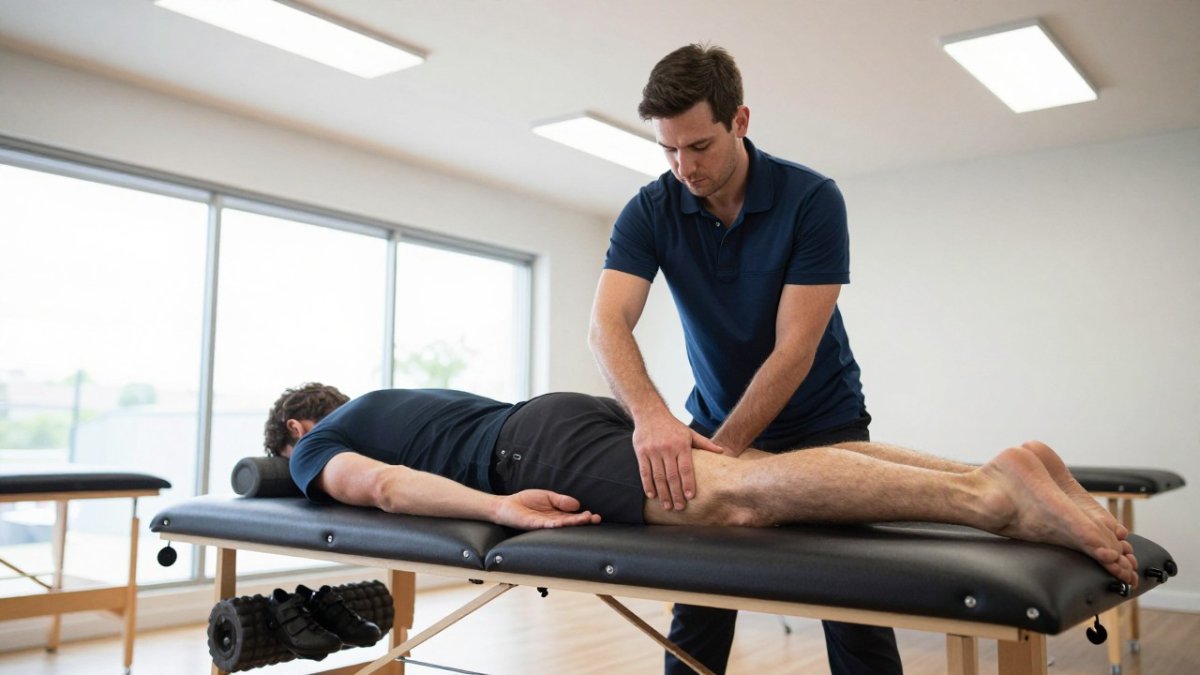
Book a Hands-On Assessment for Your Neck
Working out why your neck stays stiff is easier with a trained set of hands and a proper history.
At Fix My Muscles, our team combines remedial massage, sports massage, dry needling, myofascial cupping and manual stretch therapy within the MARS framework.
Stop guessing at the cause. Book a hands-on assessment and get a clear plan for your neck.
Persistent neck stiffness rarely fixes itself through rest alone.
Frequently Asked Questions
What can cause persistent neck stiffness?
Most persistent neck stiffness comes from muscle strain and tension, poor posture during screen use, prolonged sitting, or an awkward sleeping position. Joint wear such as cervical spondylosis, cervical disc changes, stress and some health conditions can also contribute. Because the causes overlap, a hands-on assessment that checks range of motion, muscle tension and joint behaviour usually narrows down the likely driver faster than guessing from symptoms alone.
How can I tell whether neck stiffness is muscular?
Muscular stiffness typically feels tight and achy, eases with gentle movement and heat, and is tender to touch along the neck and shoulders. It often follows a long day at the desk, a poor night's sleep or unaccustomed activity. Stiffness that comes with radiating arm pain, numbness, weakness, fever or a headache unlike your usual one is less likely to be purely muscular and needs medical review.
Should I see a doctor or a musculoskeletal therapist for persistent neck stiffness?
See a doctor first if you have red flags such as fever, unexplained weight loss, severe headache, numbness, weakness or stiffness after trauma. For mechanical stiffness without warning signs, a musculoskeletal therapist can assess posture, joint movement and muscle tension, then use hands-on treatment and mobility work. If your symptoms do not improve within a few weeks or keep recurring, a medical review is sensible alongside therapy.
Can poor posture or screen use cause neck stiffness?
Yes. Sustained forward head posture and slouching load the neck muscles and spinal joints for long periods, which leads to tension, restricted range of motion and stiffness. Breaking up screen time, adjusting monitor height and adding regular neck mobility exercises for stiffness reduces the cumulative load. If stiffness has already set in, hands-on treatment can release tight tissue so exercises are more effective.


Comments